

Context-aware recommendations
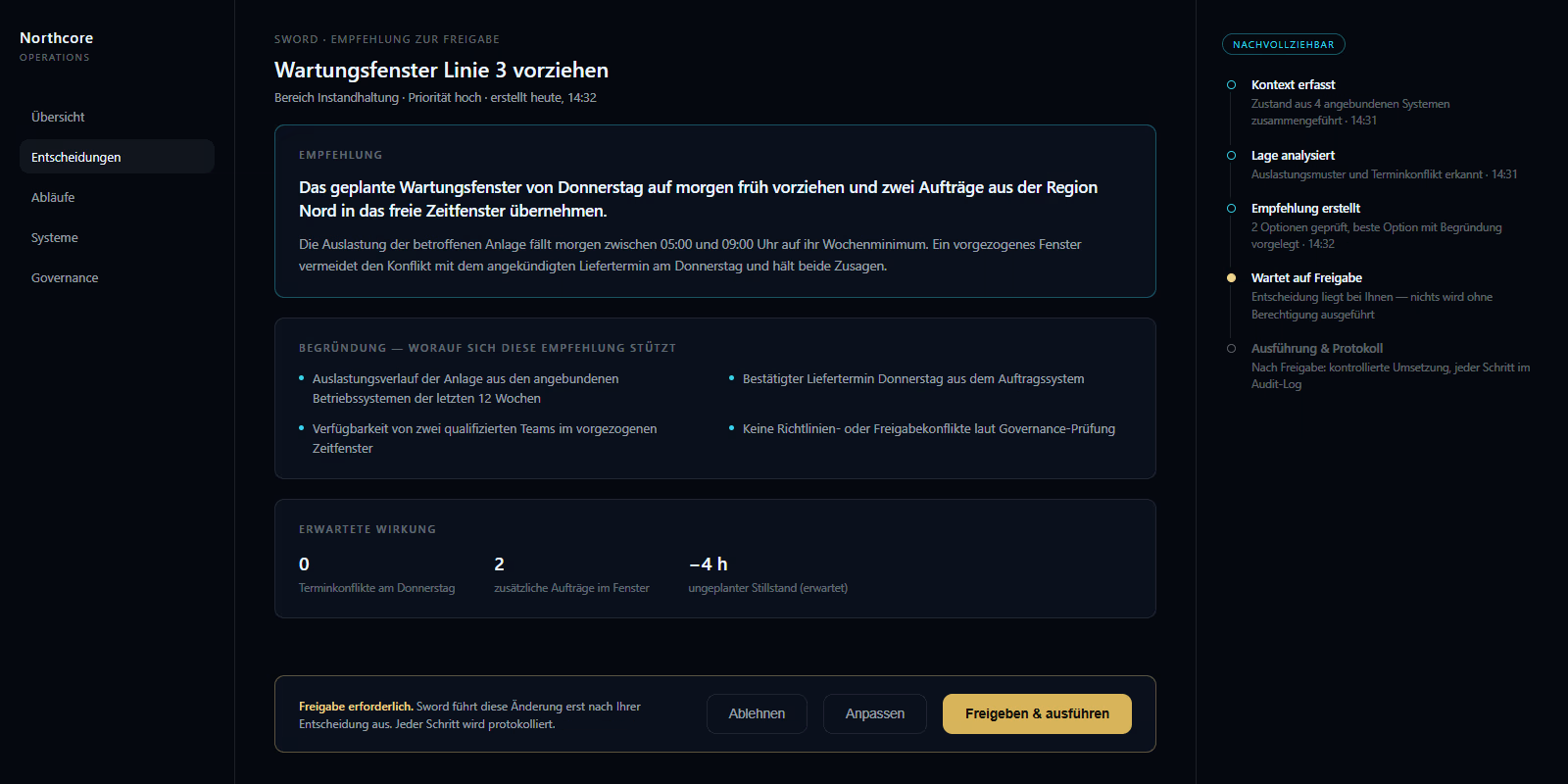
Sword suggests next steps – with rationale and confidence level. Uncertain cases stay with the human.
Sword · Adaptive intelligence
Sword is not a chatbot. The AI understands context, recognizes patterns and adapts interfaces to role, task and situation. Recommendations are explainable – and the human decides.
Adaptive interfaces
The same data – prepared appropriately for every role, within its permissions. Pick a role and watch Sword adapt the same platform.
Sword condenses operational data into a few relevant statements: developments, risks and opportunities – with a direct path into the details.
Principle
Sword recommends and explains. The final call always rests with a human. This is how every recommendation is built – dissected on an example from the demo data:
ANATOMY OF A RECOMMENDATION · EXAMPLE · DEMO DATA
01 · RECOMMENDATION
Sword proposes a concrete next step – as a suggestion, not an action.
02 · RATIONALE
Swapping stops 3 and 4 saves about 35 minutes. Every recommendation states what it is based on.
03 · CONFIDENCE
Sword shows how reliable the assessment is. At low confidence it asks for a manual review instead of guessing.
04 · DECISION
The decision stays with the human – and Sword learns from every response.
“Every recommendation states its rationale and can be adjusted or dismissed. Sword doesn't decide – you do.”
Capabilities
Sword recognizes context and patterns, prioritizes information and suggests next steps – transparently, and always with a human making the final call.
Sword suggests next steps – with rationale and confidence level. Uncertain cases stay with the human.
The same platform adapts to role, task and situation – every view shows what matters now.
Metrics aren't just displayed, they're put into context: with observations, trends and concrete proposals.
See in a demo how Sword understands your company's roles, workflows and data – explainable, adjustable and within your permissions.